|
|
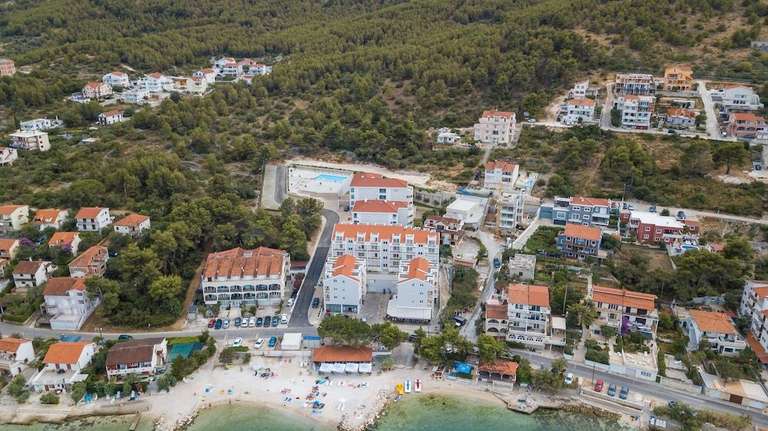
Immerse yourself in the heart of magical Trogir for your next holiday retreat, experiencing a healthy blend of cultural highlights, vibrant landscapes, and intriguing history while sampling its local culinary wonders. Renowned for its fortified wall and breath-taking cathedrals, Trogir is also a famed UNESCO World Heritage Centre, offering an abundance of ancient Roman and Renaissance architecture that guaranteed to leave you stunned. Enjoy a refreshing dip in the crystal clear waters by the harbour or take a leisurely sail on the glistening Adriatic Sea. For those seeking a more adventurous holiday, explore the hillside hiking trails for a healthy dose of nature or try windsurfing for a truly exhilarating experience. Nightlife in Trogir is a lively mix of cosy bars, exclusive clubs and classy restaurants, each adding to the vibrant atmosphere of this fascinating Croatian town. Shopaholics will relish the opportunity to browse local boutiques brimming with unique items and trinkets. A visit to Trogir's fresh market is highly recommended, where a cornucopia of locally sourced fruits and vegetables await. With our Trogir holidays, embark on an unforgettable journey soaking in layers of history, copious amounts of natural beauty, and genuine Croatian hospitality.
Enjoy access to special prices, only available on package deals.
Choose from thousands of flights, hotels and stays.
Book with a small deposit and pay the rest later.
Quickly add insurance, luggage, rental cars and more.
You are protected
Book the best deals on holidays to Trogir today!
Flight time: There are no flights to Trogir. Flights to Split Airport, which is closer to Trogir than it is to Split take about 2 hours 30 minutes from London.
Transfer time:
From Split Airport, it’s a quick 10-minute taxi ride to Trogir.
Alternatively, you can take a local bus that will get you to the town centre in about 20 minutes.
Price:
The bus fare to Trogir is €2 for a one-way ticket, while a taxi from the airport to Trogir costs around €20.
Deciding when to take your Trogir holidays will depend on how much you enjoy the heat and the company of your fellow tourists.
April to June:
A wonderful time to visit if you enjoy fewer tourists but don’t mind the still very warm temperatures, typically 18°C to 25°C.
There’s plenty of sunshine (8 to 10 hours daily) and minimal rainfall (20–50mm).
July to August:
Peak season when temperatures can soar to 30°C or higher, there are around 12 hours of sunshine daily, and rainfall is unusual.
The town is very busy with visitors during these months.
September to October:
Although still fairly busy, the shoulder season remains a good time for Trogir holidays, with temperatures from 18°C to 26°C and about 7 to 9 hours of sunshine.
Rainfall increases slightly, ranging from 50mm to 100mm.
November to March:
Although still incredibly mild, with temperatures around 10°C to 15°C, rainfall is slightly higher (60–120mm).
However, the city is much quieter and accommodation prices are lower.
Spoken languages: Croatian is the official language, but English is widely spoken in the town.
Local habits and customs: Croatians are welcoming and gregarious. Greeting people with a smile and saying “dobar dan” (good day) will be much appreciated. Tips (napojnice) are not obligatory, but if you’ve had a round of drinks or a full meal, it’s polite to round up the bill by 10 percent or to the nearest convenient figure.
Currency: The official currency is the Euro. ATMs are widely available, and credit cards are accepted in most places.
Getting around: Trogir is compact and best explored on foot, but local buses are convenient for travel beyond the town. There are good ferry connections to the nearby Drvenik islands.
Electricity and plug types: Wall sockets in Croatia operate at 220 volts and take round, two-pin plugs. British and US travellers should purchase a continental adaptor before leaving home.
Time zone: Trogir is in the Central European Time (CET) zone, which is 1 hour ahead of GMT, and observes Daylight Saving Time.
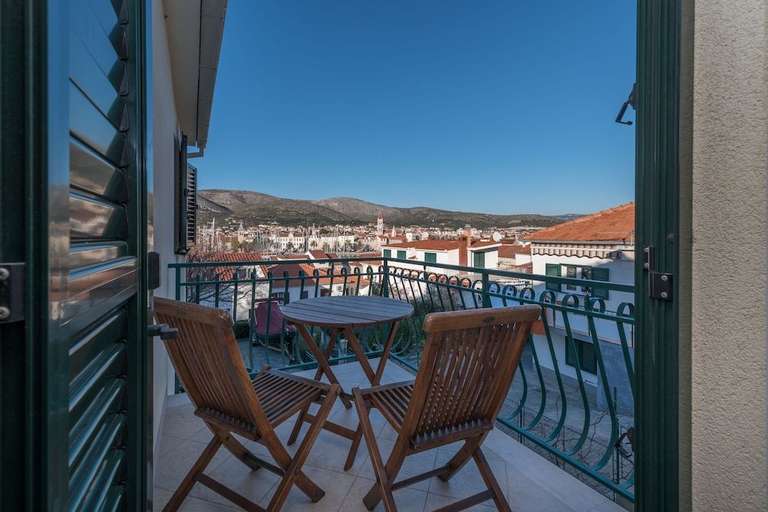
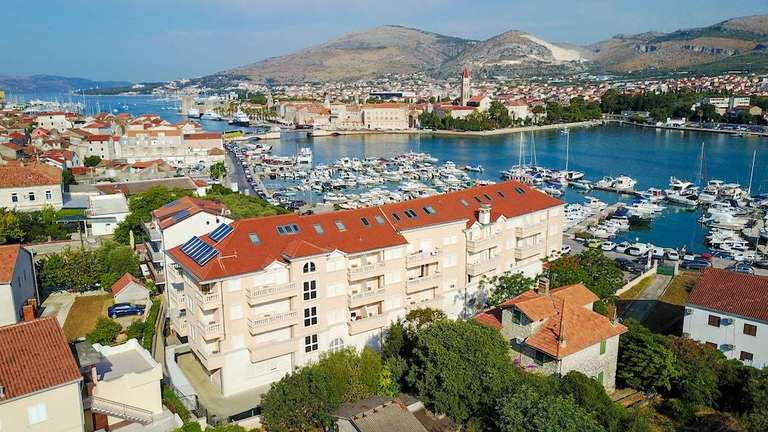
Trogir is one of the most seductive towns on the Dalmatian coast, with a cluster of palaces, belfries and cobbled alleys fanning out from an antique central square.
Kamerlengo Castle: An irregular quadrilateral structure dominated by a stout octagonal tower, this is a wonderfully atmospheric venue for a quick stroll on the battlements.
St. Lawrence Cathedral Bell Tower: The soaring Venetian Gothic tower, climbable via dizzying flights of steps, provides an unparalleled view over town.
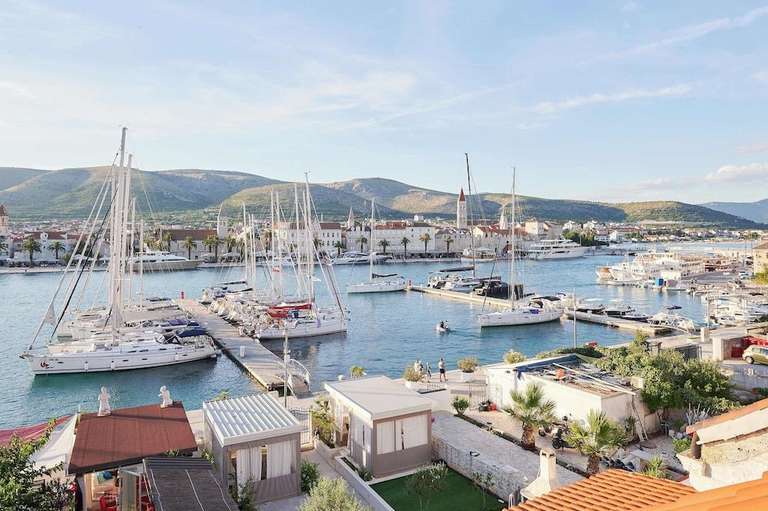
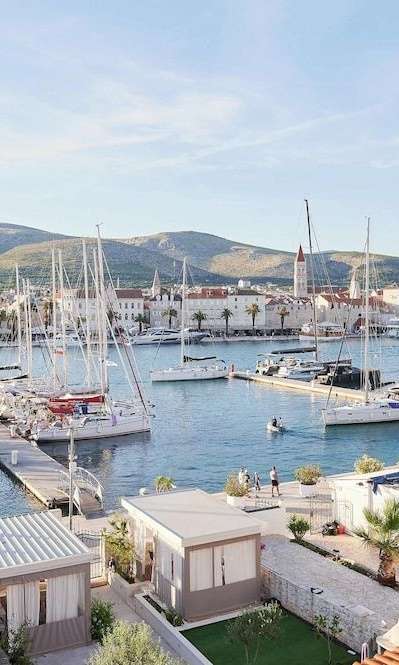
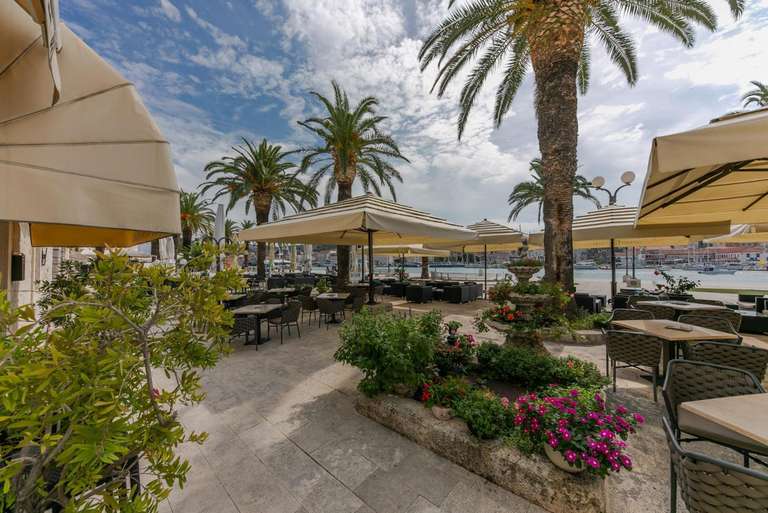
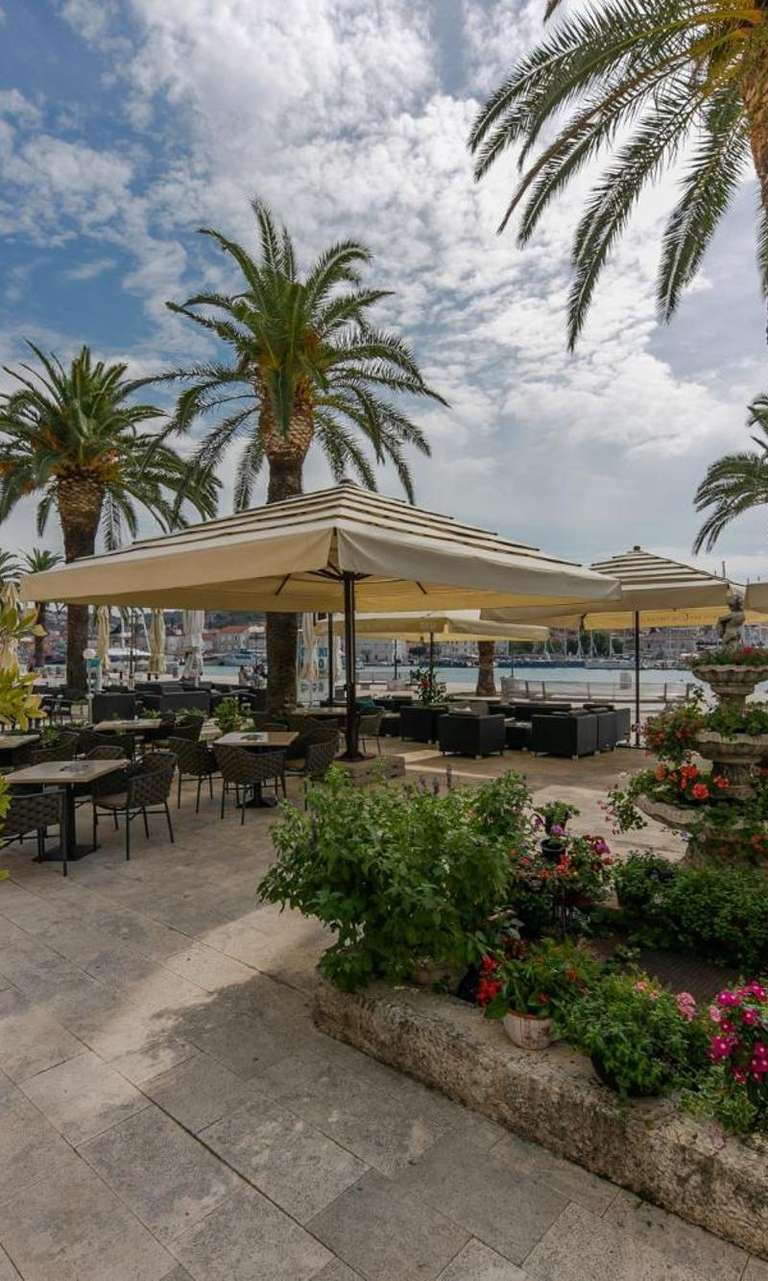
Riva: A seafront promenade facing the island of Čiovo, the Riva embankment is tastefully landscaped with palm trees - a perfect stretch for a stroll and the occasional cup of coffee.
Ciovo Island: Connected to Trogir by a bridge, seductive Ciovo Island offers beautiful beaches and an even more laid-back vibe than the town itself.
Town Museum: A compelling collection of pictures and documents which boasts one standout exhibit, a serene 15th-century relief of the Virgin and Child rendered in milky-white marble by local sculptor Ivan Duknović.
Ostrog Primary School botanical garden: Just a few minutes along the coast, this charming and unique botanical garden set in the grounds of the Ostrog Primary School in Kaštel Lukšić has grown to become a renowned showcase of Mediterranean and global flora.
St. Lawrence Cathedral: A squat Romanesque structure begun in 1213 and only finished some three centuries later, its most distinctive feature is its west portal, an astonishing piece of work carved in 1240.
Town Loggia: With its handsome clock tower and classical columns, the standout feature of the loggia is the large relief on the east wall, showing Justice flanked by St John of Trogir and St Lawrence.
Marmont’s Gloriette: A graffiti-covered, six-pillared gazebo looking out onto Čiovo’s rusting shipyard, built for Marshal Marmont, the French governor of Napoleon’s Illyrian Provinces.
Split: With its seafront cafés and ancient alleyways, shouting stallholders and travellers on the move, bustling, exuberant Split is one of the Mediterranean’s most compelling cities.
Salona: Thought to have been the fourth-largest city in the Roman Empire, the magnificent ancient ruins of Salona poke out from among the meadows, olive groves and vineyards.
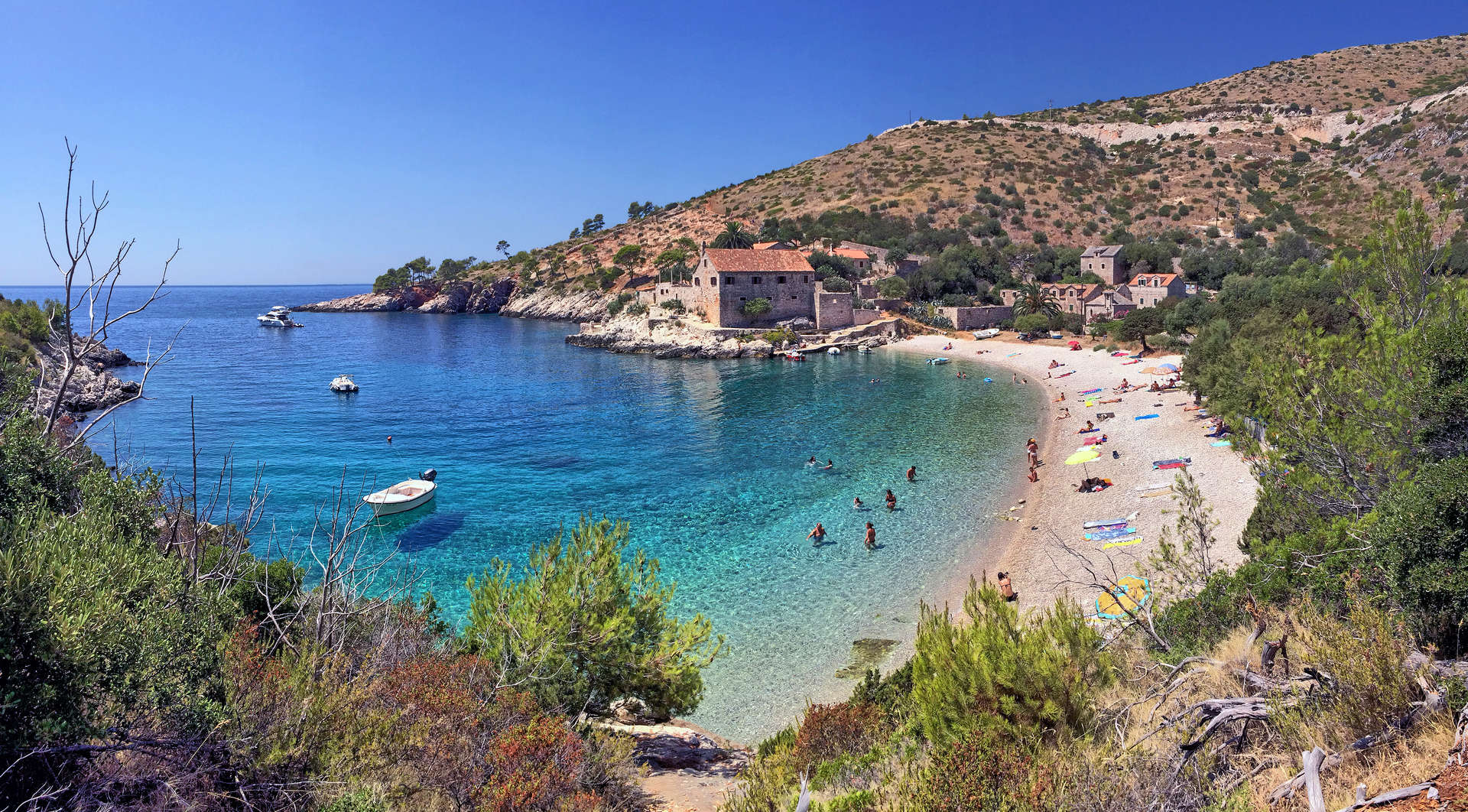
Hvar Island: A short ferry ride away, beautifully unspoiled and pitted with a wealth of bays and coves, the island of Hvar still has plenty to enchant the seclusion-seeker.
Trogir is an excellent destination for families, with plenty of activities on hand to keep the gang entertained for days.
Beaches: Trogir has a couple of family-friendly beaches, the best of which is Okrug on Ciovo Island, whose shallow waters make it well-suited to those with younger kids.
Marjan Peninsula: Marjan in nearby Split is the area’s biggest natural recreational zone, and families could quite easily detain themselves here for a day, whether they’re hiking the trails, visiting medieval churches or dipping their toes in the crystal clear waters around Bene Bay.
Klapa concerts: For an entertaining evening out as a family, attend a Klapa concert, the traditional male- and female-voice choirs of Dalmatia; you’ll find these taking place on summer evenings in the courtyard of the Garagnin-Fanfogna Palace.
Island visits: Fancy a lazy day by the sea? Some 12km west of town, Mali Drvenik and Veli Drvenik are small, sparsely populated islands little visited by other travellers, making them perfect for a quiet family getaway.
With a little imagination and planning, holidays to Trogir need not be expensive, and there are many ways to enjoy the town on a budget.
Free events: A town fixture for more than 50 years, Trogir’s Summer Festival entails lots of performances showcasing local music, dance and theatre, many of which are free, while Fisherman’s Night on Ciovo Island is a lively evening of wine, song and dance - and fish.
Promenade walks: With centuries-old buildings on one side and multi-million dollar boats anchored on the other side, you can easily while away a few hours on an evening stroll, perhaps stopping for an ice cream.
Local Markets: There’s a hugely enjoyable market opposite the bus station, where you’ll find fruit, veg, cheese, ham and home-made wines and spirits offered by local farmers, haphazardly bottled into all kinds of containers - and you can pretty much sample all you want.

Trogir and its environs are a natural playground, offering gentle water-bound coastal activities as well as more hardcore pursuits such as river rafting and mountain hikes.
Rafting: Rafting down the River Cetina is the ultimate adrenaline rush, with excursions usually starting at Penšići and ending at Radmanove Mlinice, 10km further down. For a real white-knuckle, whitewater ride, try and schedule a trip after heavy rain - admittedly a rare occurrence.
Boat tours: There are plenty of companies operating out of the harbour, so hop aboard and explore the nearby islands, coves and hidden beaches – with stops for snorkelling and swimming along the way.
Sea kayaking: A popular pastime along the coastline, you’ll see shoals of orange-bibbed paddlers taking to the waters here – stand-up paddleboarding is big here too.
Hiking: The Marjan Peninsula is a popular spot for hiking, offering a good mix of easy to medium trails, but serious hikers should head to Mt Mosor or the Biokovo Massif further south.
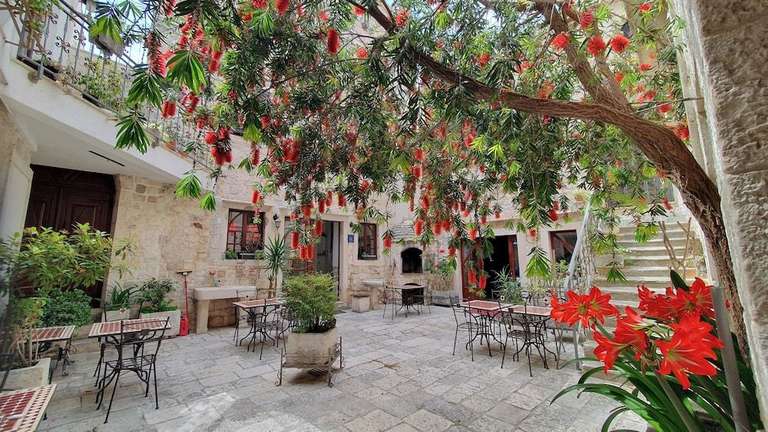
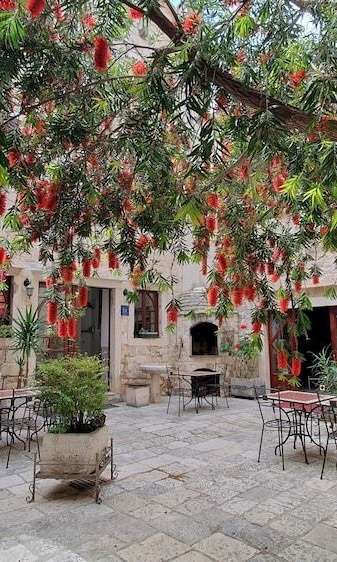
Eating out in Trogir is a joy, with dozens of restaurants tucked away in the courtyards of the centre.
Prsut: Dalmatia’s most celebrated hors d’oeuvre is pršut, home-cured ham served in thin, melt-in-the-mouth slices. Perfect with a drop of wine.
Frogs legs: Unusual perhaps, but these tasty morsels – popular throughout the region – are either fried in breadcrumbs, grilled with garlic, or wrapped in slivers of pršut.
Soparnik: Sumptuous savoury pie made with Swiss chard, onions and garlic, encased in thin dough - a great vegetarian option in a country where there are few.
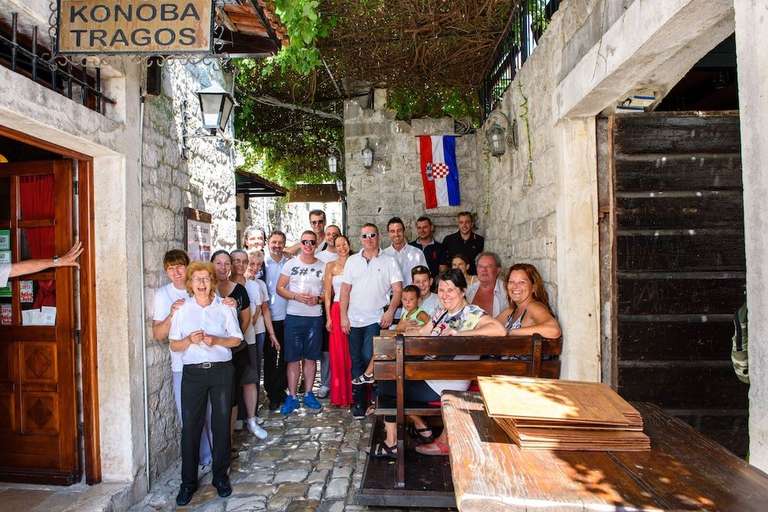
Pašticada: Slabs of beef stewed in prunes and red wine, a dish that features on the lunchtime menus of almost every konoba (a small restaurant or traditional tavern).
Ćevapi: Juicy rissoles of grilled minced meat served with ajvar (a pepper-based condiment) and flatbread – the classic Balkan staple.
Brudet: A scrumptious fish stew comprising various types of fish, to which tomatoes and wine are added, and typically served with polenta.
Crni rižot: One of Dalmatia's most iconic dishes, this black risotto takes its name from the main ingredient, cuttlefish ink – and the blacker the risotto, the better the taste.
Burek: A thick, flaky pastry packed with either minced meat, cheese or spinach, perfect for lunch on the run.
Rafioli: Delicate almond-filled pastries from Trogir are usually consumed during holidays and special occasions.
Rožata: Similar to crème caramel, this creamy dessert is flavoured with caramel and often served chilled.
Prošek: A sweet dessert wine made from dried grapes, Prošek is a local speciality that pairs wonderfully with desserts.
Rakija: There’s nothing like a shot of rakija (grape brandy) to oil the wheels of social intercourse. Knock back a herb-infused travarica or carob-flavoured rogačica for a truly heart- and soul-warming experience.
The most popular places to visit in Trogir are: Cathedral of St. Lawrence, Public Beach, Green Market.
Trogir is the ideal destination for Beach.
The exact flight duration to Trogir varies depending on the departure airport in the UK. It takes approximately 2h20m to fly from London to Trogir.
Booking a flight + hotel package to Trogir with lastminute.com offers several advantages. By booking both services together, you can take advantage of exclusive deals and choose from thousands of flights and accommodations for the perfect combination. Additionally, you can secure your vacation with a deposit and pay the remaining amount later. You also have the flexibility to add other travel extras such as insurance, rental cars, and luggage to the flight + hotel package as per your preferences.
Before travelling from the UK to Trogir, ensure your passport is valid for the duration of your stay. To get the latest Visa information for Trogir, please check travel advice on GOV.UK.
Travel with us
Secure payment