|
|
Embark on holidays to Split, a captivating city on Croatia's stunning Adriatic coast, offering a treasure trove of unforgettable experiences. Famous for its blend of Roman history and contemporary Croatian culture, Split is home to the UNESCO-listed Diocletian's Palace, revealing the region's rich past. Discover vibrant eateries and food markets with fresh local seafood and traditional Croatian dishes. Marjan Forest Park offers panoramic views and tranquil trails, while the nearby Split Archipelago provides idyllic beach getaways and water sports. Museums, galleries, and festivals reflect Split's lively spirit, combining relaxation, adventure, history, and gastronomy.
Enjoy access to special prices, only available on package deals.
Choose from thousands of flights, hotels and stays.
Book with a small deposit and pay the rest later.
Quickly add insurance, luggage, rental cars and more.
You are protected
Book the best deals on holidays to Split today!
Flight time: Flights to Split from London take about 2 hours 30 minutes. Various airlines operate direct flights from other major UK airports.
Transfer time: From Split Airport, the airport shuttle bus takes around 30 minutes to reach the city centre, stopping at the main bus station near the harbour. Taxis are another option, taking approximately 25 minutes.
Price: The airport shuttle bus costs around €5 one way. A taxi from the airport to the city centre will set you back approximately €30.
April to June
A wonderful time for Split holidays if you enjoy fewer tourists but don’t mind the still very warm temperatures, typically 18°C to 25°C. There’s plenty of sunshine (8 to 10 hours daily) and minimal rainfall (20–50mm).
July to August
Peak season when temperatures can soar to 30°C or higher, there’s around 12 hours of sunshine daily, and rainfall is unusual. The city is very busy with visitors during these months, especially people seeking ferries to the islands.
September to October
Although still fairly busy, the shoulder season remains a good time to visit, with temperatures from 18°C to 26°C and about 7 to 9 hours of sunshine. Rainfall increases slightly, ranging from 50mm to 100mm.
November to March
Although still incredibly mild, with temperatures around 10°C to 15°C, rainfall is slightly higher (60–120mm). However, the city is much quieter and accommodation prices are lower.
Spoken languages: Croatian is the official language, but Split is a cosmopolitan city and English is widely spoken.
Local habits and customs: Croatians are welcoming and gregarious. Greeting people with a smile and saying "dobar dan" (good day) will be much appreciated. Tips (napojnice) are not obligatory, but if you’ve had a round of drinks or a full meal, it’s polite to round up the bill by ten percent or to the nearest convenient figure.
Currency: The official currency is the Croatian Kuna (HRK). ATMs are widely available, and credit cards are accepted in most places.
Getting around: It’s generally easiest to walk around the city, though for journeys out to the Marjan peninsula and some of Split’s museums you may need to take one of the city’s buses; these are frequent and tickets can be bought from the driver or conductor or from newspaper and tobacco kiosks.
Electricity and plug types: Wall sockets in Croatia operate at 220 volts and take round, two-pin plugs. British and US travellers should purchase a continental adaptor before leaving home.
Time zone: Split is in Central European Time (CET), which is 1 hour ahead of GMT. Daylight Saving Time is observed.
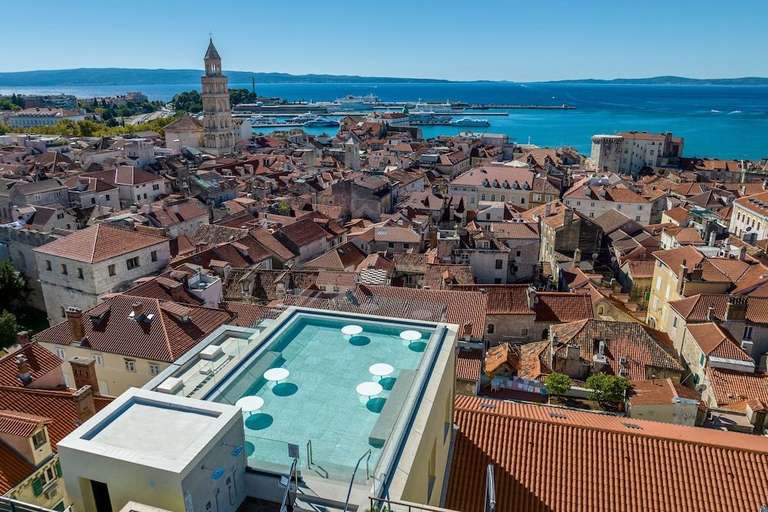
With its seafront cafés and ancient alleyways, shouting stallholders and travellers on the move, bustling, exuberant Split – Croatia’s second city – is one of the Mediterranean’s most compelling destinations.
Marjan Hill: Crisscrossed by footpaths and minor roads, the wooded heights of the Marjan peninsula provide stunning panoramic views of the city’s red-tiled roofs and the surrounding Adriatic Sea.
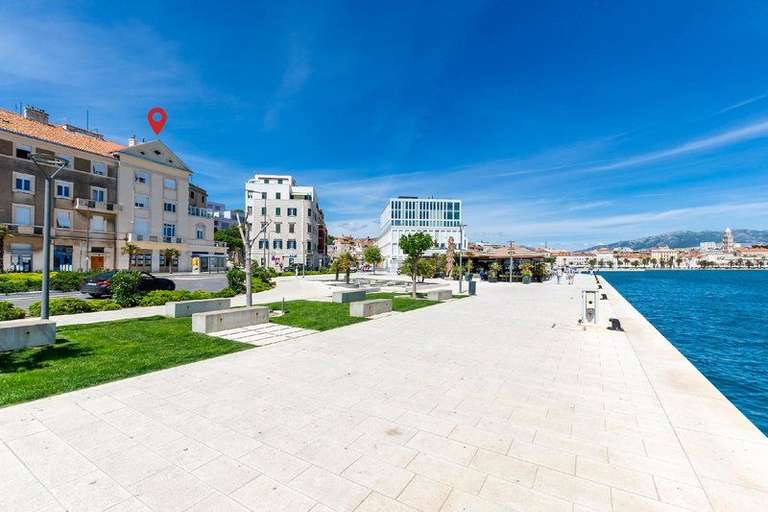
Riva Promenade: Split’s seafront Riva is where the city’s population congregates daily to meet friends, catch up on gossip and slouch over a leisurely coffee.
Diocletian’s Palace: With its unique tangle of Roman and medieval remains, Diocletian’s former palace forms the vibrant heart of today’s modern Split.
Bacvice: This has long been Split’s main focus of summer leisure, with real sand underfoot and a shoreline promenade liberally sprinkled with cafés.
Archeological Museum: Much of Split’s ancient heritage is on display in this small but beautifully presented collection of Illyrian, Greek and Roman artefacts, mostly plucked from the rich excavation sites at nearby Salona.
Meštrović Gallery: Wonderful collection housed in the ostentatiously palatial building which the country’s most famous modern sculptor planned as his home and studio.
Diocletian's Palace: Taken over by the townsfolk centuries ago, the Roman emperor’s pied-à-terre now forms the chaotic heart of the modern city.
St. Domnius Cathedral: This splendid cathedral is a blend of ancient Roman and medieval architecture, rich in both history and artistry.
Hvar Island: A short ferry ride away, beautifully unspoiled and pitted with a wealth of bays and coves, the island of Hvar still has plenty to enchant the seclusion-seeker. Brac is another easily accessible day trip. You can also check our great deals on holidays to Hvar.
Salona: Thought to have been the fourth-largest city in the Roman Empire, the magnificent ancient ruins of Salona poke out from among the meadows, olive groves and vineyards.
Split is a fantastic destination for families, with plenty of both land and water-based activities on hand to keep the entire gang entertained for days.
Beaches: For a major city Split has quite a variety of beaches offering clean, safe swimming, all within easy reach of the centre. Bacvice is ideal for families with young children, its shallow waters perfect for paddling and playing; there’s also a well-equipped children’s play park in the square immediately behind the beach.
Interactive Museums: Froggyland (yes, really) is a super quirky museum featuring over 500 stuffed frogs arranged in human-like scenarios.
Marjan Peninsula: Marjan is Split’s biggest natural recreational zone, and families could quite easily detain themselves here for a day, whether they’re hiking the trails, visiting medieval churches or dipping their toes in the crystal clear waters around Bene Bay.
Holidays to Split need not be expensive, and there are many ways to enjoy the city without spending very much at all.
Festivals: Split does festivals in abundance, notably the Feast of St Domnius on May 7, which celebrates the city’s protector with processions, Masses and general festivity; and the Summer Festival, comprising a spate of cultural events – theatre, classical music and opera – with some performances staged for free.
Beaches: Split’s surprising number of beaches offer clean, safe swimming, all within easy reach of the centre and all free. Bacvice and Kasjuni are two excellent examples.
City strolls: Wander the ancient streets of Diocletian’s Palace or enjoy a leisurely walk along the Riva promenade – and watch the sun go down – all without spending a penny (save, perhaps, for the occasional ice cream).
Split and its environs are a natural playground, from gentle water-bound coastal activities to more hardcore pursuits such as river rafting and tough mountain hikes.
Sea kayaking: A popular pastime along the Split coastline, you’ll see shoals of orange-bibbed paddlers taking to the waters here – it’s a great way to view the city from afar. Stand-up paddleboarding is big here too.
Boat tours: There are plenty of companies operating out of the harbour, so hop aboard and explore the nearby islands, coves and hidden beaches – with stops for snorkelling and swimming along the way.
Rafting: Take to the rapids for high-energy whitewater thrills and spills on the River Cetina. Getting wet has never been so much fun.
Hiking: The Marjan Peninsula is a popular spot for hiking, offering a good mix of easy to medium trails, but serious hikers should head to Mt Mosor or the Biokovo Massif further south.
Cycling: A nexus of cycling paths wend their way through the pine forests and coastline of the Marjan Peninsula, with hire bikes available from several city-centre outlets.
Split boasts a variety of stunning beaches perfect for every type of holiday-goer. Whether you prefer secluded spots, family-friendly environments, or lively beaches with water sports, Split has it all.
Located just a short walk from Split's Old Town, Bačvice Beach is famous for its sandy shore and clear, shallow waters, making it ideal for families with young children. This Blue Flag beach is not only perfect for swimming but also for playing the popular local game of picigin.
East of the city centre, Žnjan Beach is a long, pebbly stretch popular among both locals and tourists. With numerous on-beach cafes, restaurants, and beach clubs, it offers a vibrant atmosphere. The water is clean, and the beach is accessible by a short bus ride from the city centre.
Nestled in the Marjan Hill Forest Park, Bene Beach offers a more rustic and tranquil setting. It is family-friendly, featuring playgrounds and sports facilities. Accessible by bus or on foot, it's a great spot for a peaceful day by the sea.
Kašjuni Beach, also located at the base of Marjan Hill, is one of Split's most beautiful beaches. Surrounded by a lush pine forest, it offers a mix of pebbly, rocky, and small sandy areas. This beach is less crowded and perfect for a relaxing day out.
Situated near the Radisson Blu Resort, Trstenik Beach is known for its stylish beach bar and water sports activities. Visitors can rent jet skis, book parasailing trips, and enjoy the vibrant atmosphere at the Mistral Beach Bar and Restaurant.
Just a short drive from Split, Podstrana features several gravel beaches stretching over 6 km. These beaches are perfect for a quieter, more laid-back experience. There are many small family hotels and apartments along the coast, making it an excellent choice for extended stays.
Firule Beach, another great spot close to the city centre, is known for its shallow waters and sandy areas. It’s a popular choice among locals for evening swims and offers basic amenities like showers and changing rooms.
Bring water shoes: Many of Split's beaches are pebbly, so water shoes can enhance your comfort.
Arrive early: Popular beaches like Bačvice and Žnjan can get crowded, especially during peak season.
Public transport: Use the local bus network to reach beaches like Žnjan and Bene to avoid parking issues.
Stay hydrated: The summer sun can be intense, so bring plenty of water and sunscreen.
Explore these beautiful beaches and enjoy a perfect blend of relaxation and adventure on your Split holiday.

Split is among the county’s most important gastronomic centres, and the city accommodates dozens of restaurants that can hold a candle to any of Croatia's finest – seafood, unsurprisingly, is to the fore in most places.
Pasticada: Slabs of beef stewed in prunes and red wine, this is particularly good in Split, where it features on the lunchtime menus of almost every konoba (a small restaurant or traditional tavern).
Prsut: Dalmatia’s most celebrated hors d’oeuvre is pršut, home-cured ham served in thin, melt-in-the-mouth slices. Perfect with a drop of wine.
Frogs legs: Unusual perhaps, but these tasty morsels – popular throughout the region – are either fried in breadcrumbs, grilled with garlic, or wrapped in slivers of pršut.
Ćevapi: Juicy rissoles of grilled minced meat served with ajvar (a pepper-based condiment) and flatbread – the classic Balkan staple.
Peka: Slow-roasted lamb, octopus or other local goodies under an ember-covered metal lid known as a peka is the traditional route to a deliciously succulent meal.
Brudet: A scrumptious fish stew comprising various types of fish – notably eel here in Split – to which tomatoes and wine are added, and typically served with polenta.
Crni rižot: One of Dalmatia's most iconic dishes, this black risotto takes its name from the main ingredient, cuttlefish ink – and the blacker the risotto, the better the taste.
Burek: A thick, flaky pastry packed with either minced meat, cheese or spinach, perfect for lunch on the run.
Fritule: Small doughnuts typically flavoured with rum and citrus zest, dusted with powdered sugar – a cracking little sweet street treat.
Rožata: A speciality from Dubrovnik, this is a vanilla-flavoured custard dessert similar to crème caramel, to which rose liqueur is added.
Kroštule: Deep-fried pastry twists dusted with powdered sugar, often enjoyed during festive occasions.
Rakija: There’s nothing like a shot of rakija (grape brandy) to oil the wheels of social intercourse. Knock back a herb-infused travarica or carob-flavoured rogačica for a truly heart- and soul-warming experience.
The most popular places to visit in Split are: Diocletian's Palace, Poljud Stadium, Cathedral of Saint Domnius.
Split is the ideal destination for City break.
The exact flight duration to Split varies depending on the departure airport in the UK. It takes approximately 2h20m to fly from London to Split.
Booking a flight + hotel package to Split with lastminute.com offers several advantages. By booking both services together, you can take advantage of exclusive deals and choose from thousands of flights and accommodations for the perfect combination. Additionally, you can secure your vacation with a deposit and pay the remaining amount later. You also have the flexibility to add other travel extras such as insurance, rental cars, and luggage to the flight + hotel package as per your preferences.
Before travelling from the UK to Split, ensure your passport is valid for the duration of your stay. To get the latest Visa information for Split, please check travel advice on GOV.UK.
Travel with us
Secure payment