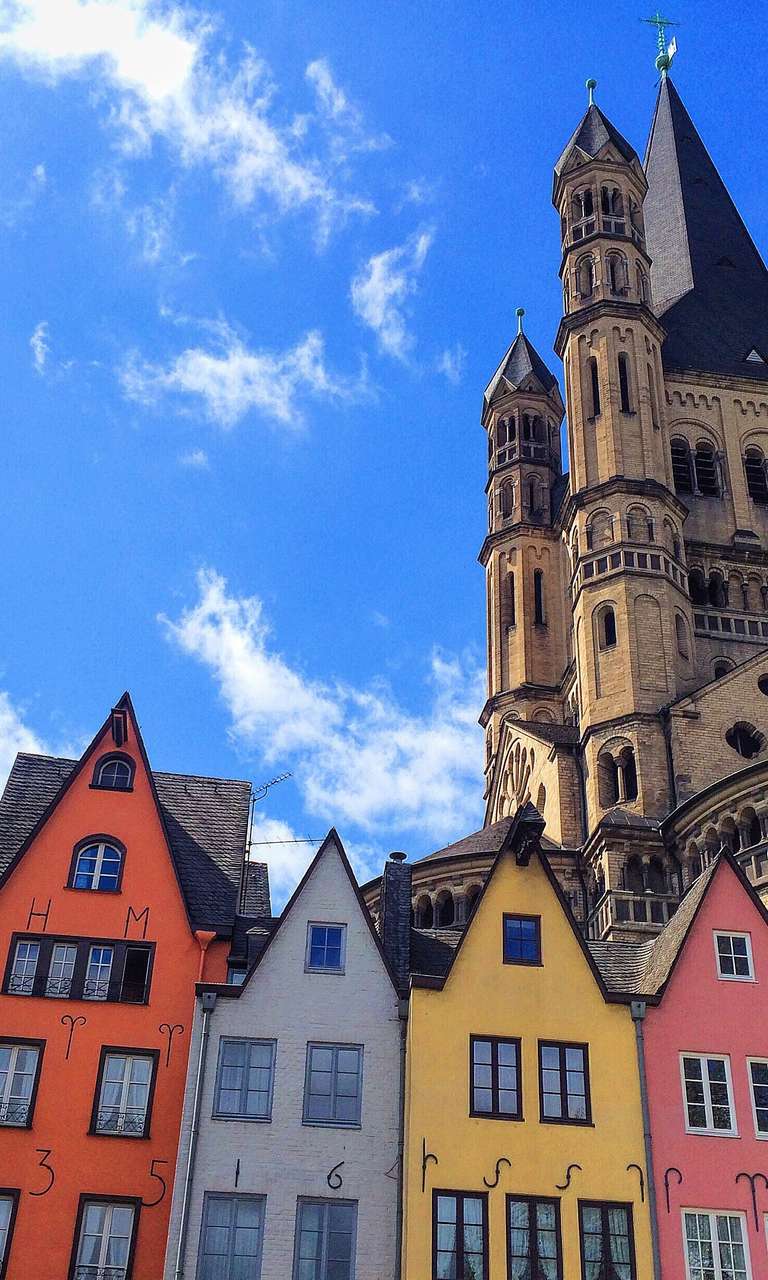
How to reach Cologne
Flight time: Flights to Cologne take between 1 hour 15 minutes and 1 hour 30 minutes from London.
Transfer time: Cologne-Bonn airport is southeast of the city, connected by S-Bahn trains every 15–20 minutes, taking around 15 minutes to the Hauptbahnhof.
Price:
Best time to visit Cologne
This will depend on what you want to get out of your trip; you may want to catch one of the festivals or take in the Christmas markets. The weather may be a factor in your decision too.
April to June: Average temperatures in spring range from 12°C to 20°C, rainfall is moderate, around 40–60mm, with 8–9 hours of sunshine daily.
July to August: Although this is high season, crowds aren’t really a problem here in Cologne. Average temperatures hover between 20°C and 25°C, rainfall is typically low (around 50–70mm), and there are up to 10 hours of sunshine. The city truly comes alive in July for Christopher Street Day, one of Europe’s biggest parades.
September to November: Cooler but still a very pleasant climate, with temperatures gradually dropping from 18°C to 10°C, increasing rainfall (50–90mm) and around 6 hours of sunshine. This is a great time to explore Cologne’s many cultural assets.
December to March: Cologne’s Christmas markets are among the best in Europe, and despite colder temperatures (2°C to 8°C) and shorter days (4–5 hours of sunshine), the city has quite a buzz about it. February sees the staging of Karneval, one of Germany’s biggest happenings, though there are dozens of events in the preceding month.
Practical information
Spoken languages: German is the official language, but English is widely spoken throughout the city.
Local habits and customs: To tip in a café, round your bill up to the next €0.50 or €1 and give the total directly to the waiter; at restaurants, you should leave around 10 percent of the bill. Jaywalking is illegal in Germany, so only cross on the green man – you could be fined if you don’t.
Currency: Germany uses the Euro (€), with credit and debit cards accepted in most restaurants and shops.
Getting around: The public transport system includes S-Bahn and U-Bahn metro networks, the latter emerging above ground at various points to become tramways, extending as far out as Bonn–Bad Godesberg. A €2.50 Kurzstrecke ticket is valid for up to four stops; to travel further within the city you’ll need a €3 EinzelTicket, or a €7 TagesTicket.
Electricity and plug types: Germany uses 230V electricity, and the plugs are type F with two round pins. UK travellers will need a plug adaptor.
Time zone: Cologne operates on Central European Time (CET), which is one hour ahead of GMT.