How to reach Val Thorens
Flight time: Flights from London to Geneva or Lyon take around 1 hour 45 minutes.
Transfer time: Transfer time is variable whether you fly into Geneva Airport or Lyon-Saint Exupéry Airport. Depending on weather conditions, it can be a 2-hour-30-minute to 3-hour drive.
Price:
Private transfer costs vary depending on the date (as a rule of thumb, off-peak weeks are cheaper) and time (day versus night rate), but a ballpark figure would be somewhere €350–€520.
Shared transfers are considerably cheaper, around €80–€85 per person for a return ticket.
Best time to visit Val Thorens
The perfect time for your Val Thorens holidays depends on the outdoor adventure you have in mind: skiing, mountain biking or hiking.
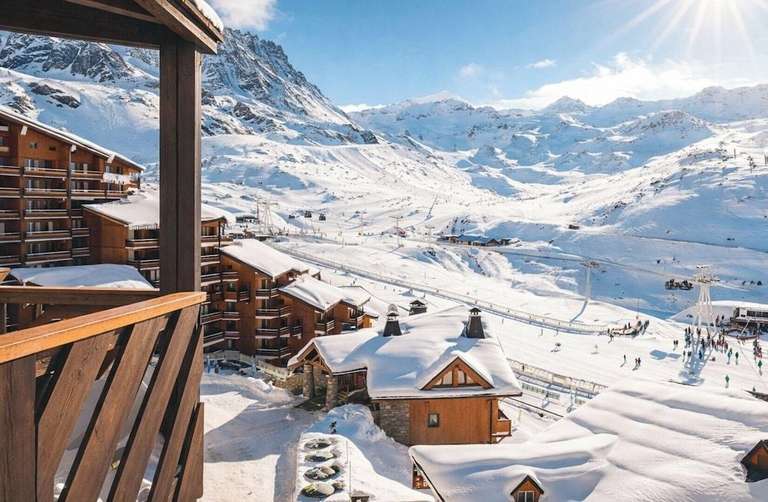
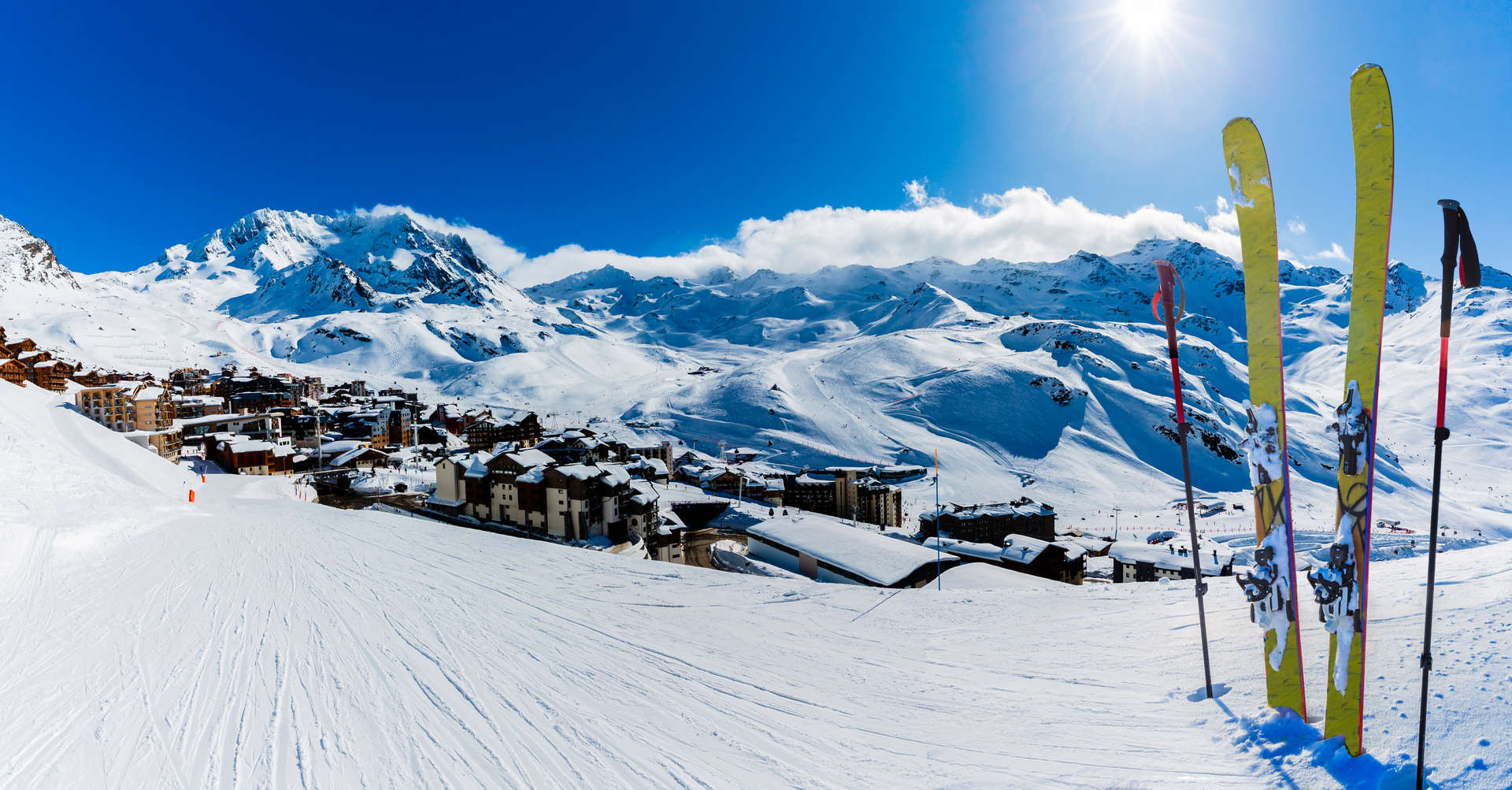
December to March experiences max daytime temperatures ranging from around -3 to 3°C and 5 hours of daily sunshine on average. These are snow-sure months; expect fresh powder regularly, especially in January. Val Thorens busiest periods line up with school holidays, so if you want to avoid crowded slopes, you’ll need to work your dates around Christmas, New Year and late February.
April to early May is considerably milder at 6 to 11°C, but snow coverage remains excellent, especially at higher altitudes. There’ll be a bump over Easter, but crowds will be thinner at this time of year.
June to August sees the resort transform into a haven for mountain bikers, hikers and other outdoorsy types. Temperatures hover around 16–18°C with about 7 hours of daily sunshine, though pack for occasional showers.
September to November puts the resort into pre-ski season mode. September and October are a cool 14–9°C, but temperatures plummet in November to 2°C. If you enjoy peaceful mountain vistas without the ski crowds, this is a perfect window, although not all the lifts and facilities will be operational.
Practical information
Spoken languages: French is the official language. Although it is hit or miss whether locals speak English in the surrounding villages, you should be fine communicating in ski resorts, restaurants or hotels.
Currency: France is in the eurozone.
Getting around: There are plenty of ways to explore the resort and its environs, from ski lifts (a one-day pedestrian 3 Vallées pass costs around €30) to complementary shuttles. Taxis are a last-ditch option; in limited supply, they’re a seller's market. As a guide, a 20-minute ride will set you back around €60.
Electricity and plug types: Standard mains electricity is 220–240V, 50Hz. Plugs are two-pin Type C and E.
Time zone: France keeps Central European Time (GMT+ 1 hour) but switches to Central European Summer Time (GMT+ 2 hours, British Summer Time + 1 hour) from the last Sunday in March to the last Sunday in October.