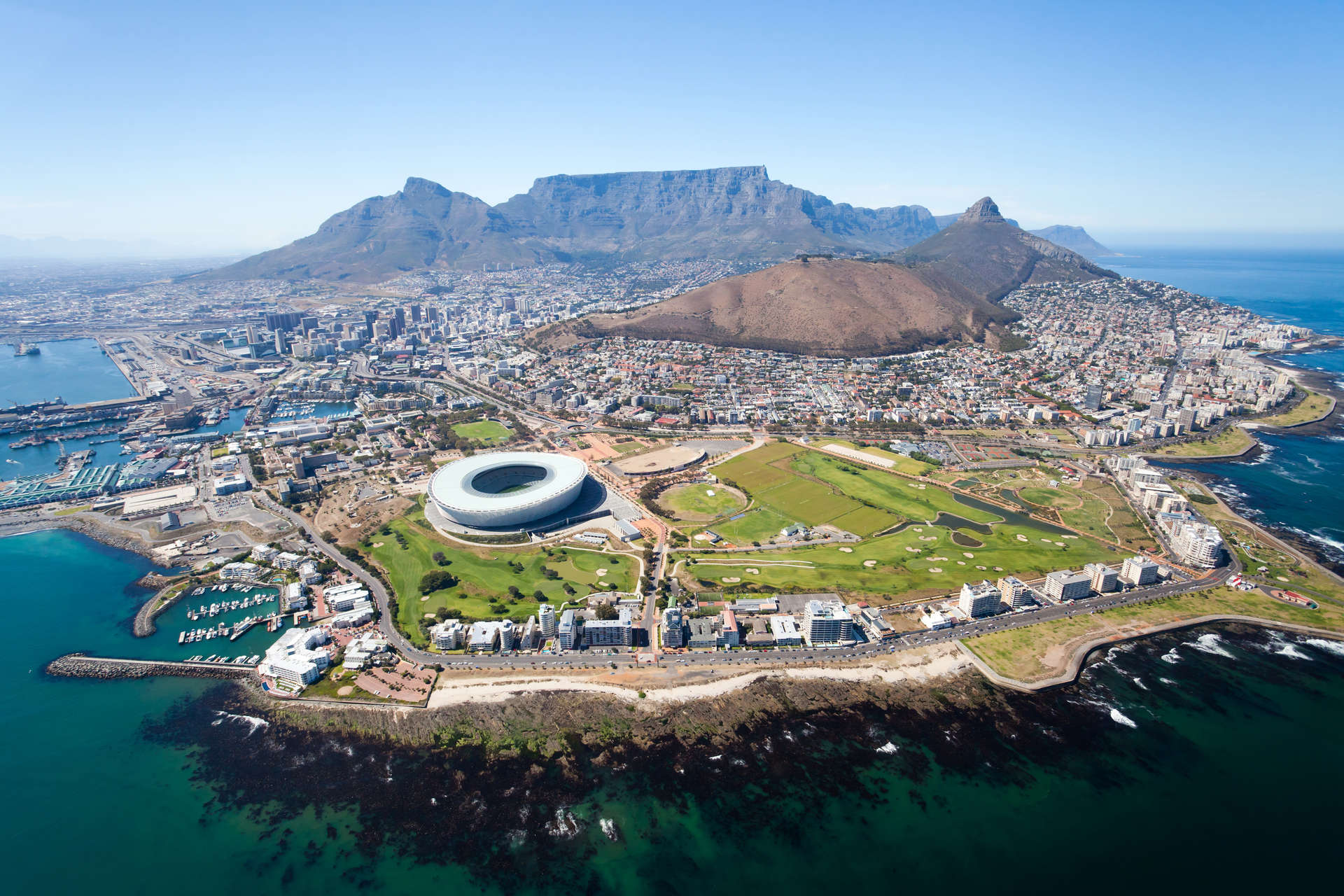
How to reach Cape Town
Flight time: Flights to Cape Town from the UK typically take just over 11 hours. Direct flights are available from London. From other UK airports, and as cheaper alternatives from London, you'll usually connect through hubs in Europe or the Middle East, or via Johannesburg.
Transfer time: Cape Town International Airport is about 30 to 50 minutes by taxi or app-based services from the city centre, depending on your exact destination and the traffic. Some hotels can arrange a pickup service, so ask about this when booking.
Price: A taxi from the airport costs R300–R600 (£13–£26), depending on the distance and traffic.
Best time to visit Cape Town
This area on the southern coast of South Africa sees warm, dry summers and mild, wet winters. The best time for holidays to Cape Town depends on what you’re hoping to do.
November to February is the peak summer season with temperatures of around 25°C to 30°C, plentiful sunshine and low – although unpredictable – rainfall. The highest temperatures coincide with the annual holidays in December and January, when some places shut down. Prices are high and popular places can get busy, so you might need to book hotels in advance.
March to May is the autumn shoulder season – a great time to visit, with mild daytime temperatures ranging from 18°C to 25°C. The number of visitors starts to thin out, and accommodation prices are a bit lower. You can still expect plenty of sunshine, making it a great time for exploring the Winelands and hiking Table Mountain.
June to August is winter, with temperatures dropping to between 11°C and 18°C. Rain is common and the days are shorter, but it’s a fantastic time to visit if you want to avoid crowds, benefit from lower-priced accommodation and enjoy whale-watching along the coast.
September to October brings the spring bloom and mild weather, and is another of the best times for Cape Town holidays. Temperatures climb back to around 15°C to 23°C, and there are fewer tourists than summer, making it an ideal time to explore the city’s gardens and nature reserves.
Practical Information
Spoken languages: South Africa has 11 official languages, with English being one, and it's widely spoken, especially in tourist areas. Afrikaans and Xhosa are also common in Cape Town, and picking up a few phrases can be appreciated by locals.
Local habits and customs: South Africans are generally friendly and welcoming, but respect for local customs is appreciated. Tipping around 10 percent in restaurants is standard, and petrol attendants and car guards also appreciate small tips.
Currency: The South African Rand (R) is the local currency. ATMs are widely available, and credit or debit cards are accepted almost everywhere. It’s a good idea to carry some cash for smaller purchases and tips.
Getting around: Cape Town has a reliable public transport system, including the MyCiti bus network, Metrorail trains and City Sightseeing bus routes. Taxis and rideshare services like Uber are also available and convenient for getting around, but car hire is recommended if you plan to explore beyond the city.
Electricity and plug types: South Africa's electricity is 220/230V and uses Type M plugs, so you’ll need an adaptor if you’re coming from the UK.
Time zone: South Africa is 2 hours ahead of GMT.