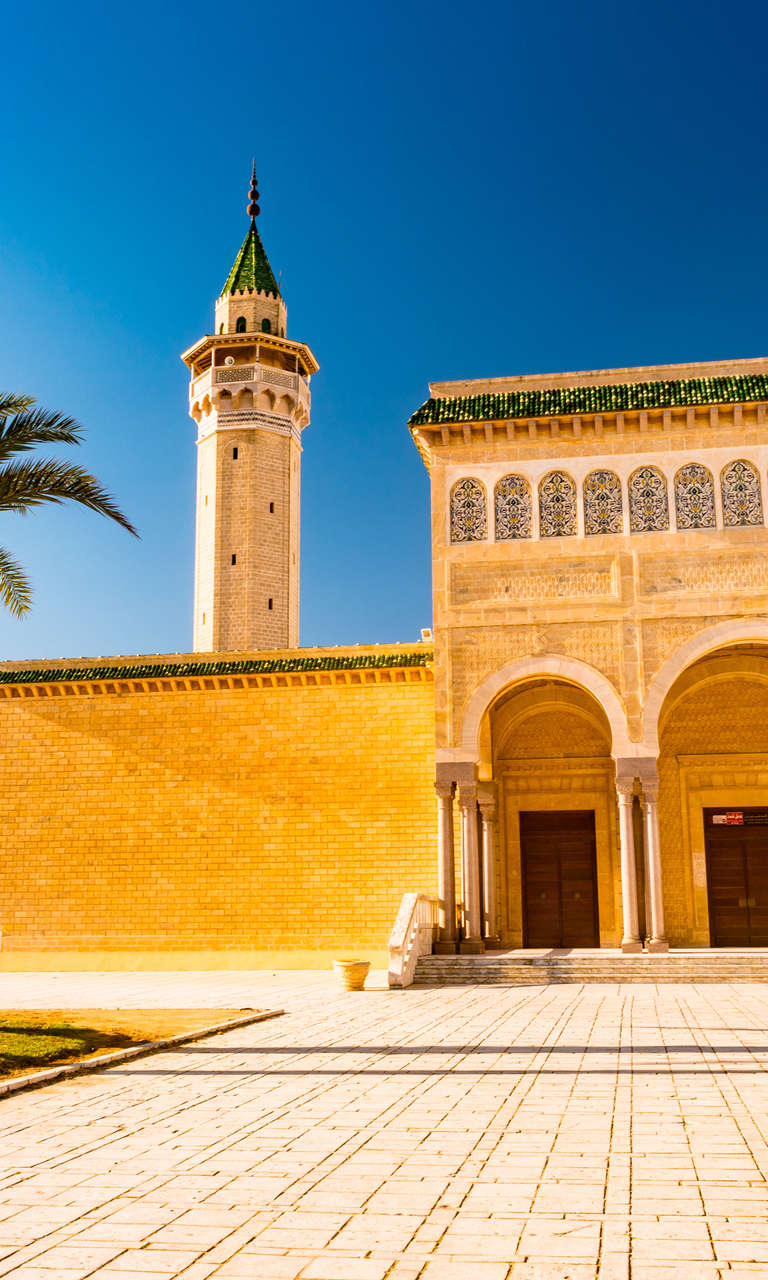
How to reach Monastir
Flight time: Some direct flights to Monastir from the UK can be found in the main tourist season and take 3 to 3.5 hours, but it’s more common to travel via a hub in France or elsewhere in Europe, which takes around 5 to 7 hours.
Transfer time: Habib Bourguiba International Airport is 15 minutes from Monastir city centre by taxi, or 11 minutes by train.
Price:
A taxi from the airport to central Monastir costs approximately DT15 (£4).
Alternatively, the train costs DT1.5 (£0.40), while some hotels offer free or low-cost transfers.
Weather and best time to visit Monastir
The best time for holidays to Monastir depends on whether you’re after a warm beach break or a quieter, cooler visit. The Mediterranean climate offers plenty of sunshine year-round, so you can choose based on your favourite activities.
April to June is an ideal time to visit, as the comfortable temperatures range from 20°C to 30°C, making it perfect for exploring historic sites and enjoying the beach without the heat and crowds of the summer, although some days can reach well over 35°C. Rainfall is low, and there is plenty of sun.
July to August is peak tourist season, with temperatures usually around 32°C to 34°C and minimal rainfall, so it’s beach weather at its best. However, it sometimes climbs to around 45°C, so plan to be in the shade or indoors in the middle of the day. Also, as it’s busier, you may need to book accommodation and tours in advance.
September to November offers a cooling down from summer, with temperatures from 30°C in September to a mild 22°C by November. There is some increase in rainfall by late autumn, but this is a great time for sightseeing and beach days.
December to March brings mild winter weather with highs hovering around 16°C to 20°C, though it gets colder inland if you’re venturing to the desert, especially at night. With fewer crowds, this is an excellent time for those interested in exploring Monastir’s historic sights.
Practical information
Spoken languages: Arabic is the official language, but French is widely spoken, especially in shops and restaurants. English is commonly understood in tourist areas, but a few phrases in French or Arabic are always appreciated.
Local habits and customs: Tunisians are warm and welcoming, and returning the friendliness goes a long way. Monastir is quite laid-back, but modest clothing is recommended away from the beach, especially when visiting mosques or historic sites. During Ramadan, it’s polite to avoid eating or drinking in public during daylight hours.
Currency: The Tunisian currency is the dinar (DT). ATMs are widely available, and debit or credit cards are accepted in larger establishments. Cash is recommended for smaller purchases and in markets.
Getting around: Taxis are readily available and affordable, as are ride-hailing services such as Bolt. Louages (shared taxis) are a budget-friendly option for getting to nearby towns. Buses are also available but less frequent. The train to Sousse is an easy and scenic way to travel up the coast.
Electricity and plug types: Tunisia's electricity operates on 230V with standard two-pin European plugs (types C and E). UK travellers should take a travel adaptor.
Time zone: Tunisia is in the Central European Time (CET) zone, which is 1 hour ahead of GMT.