How to reach Djerba
Flight time: Direct flights to Djerba are available from cities such as London, Manchester, and Edinburgh, and take around 3 hours and 30 minutes.
Transfer time: From Djerba Zarzis International Airport to the main area of Houmt Souk takes roughly 15 minutes by taxi, which are readily available outside the terminal.
Price: A taxi from the airport to Houmt Souk typically costs around DT15–DT20 (£4–£5).
Weather and best time to visit Djerba
Choosing the best time for holidays to Djerba depends on whether you prefer basking in the summer sun or milder temperatures. The Mediterranean climate gives a warm, sunny experience nearly all year round, but here’s a guide to what you can expect in the different seasons.
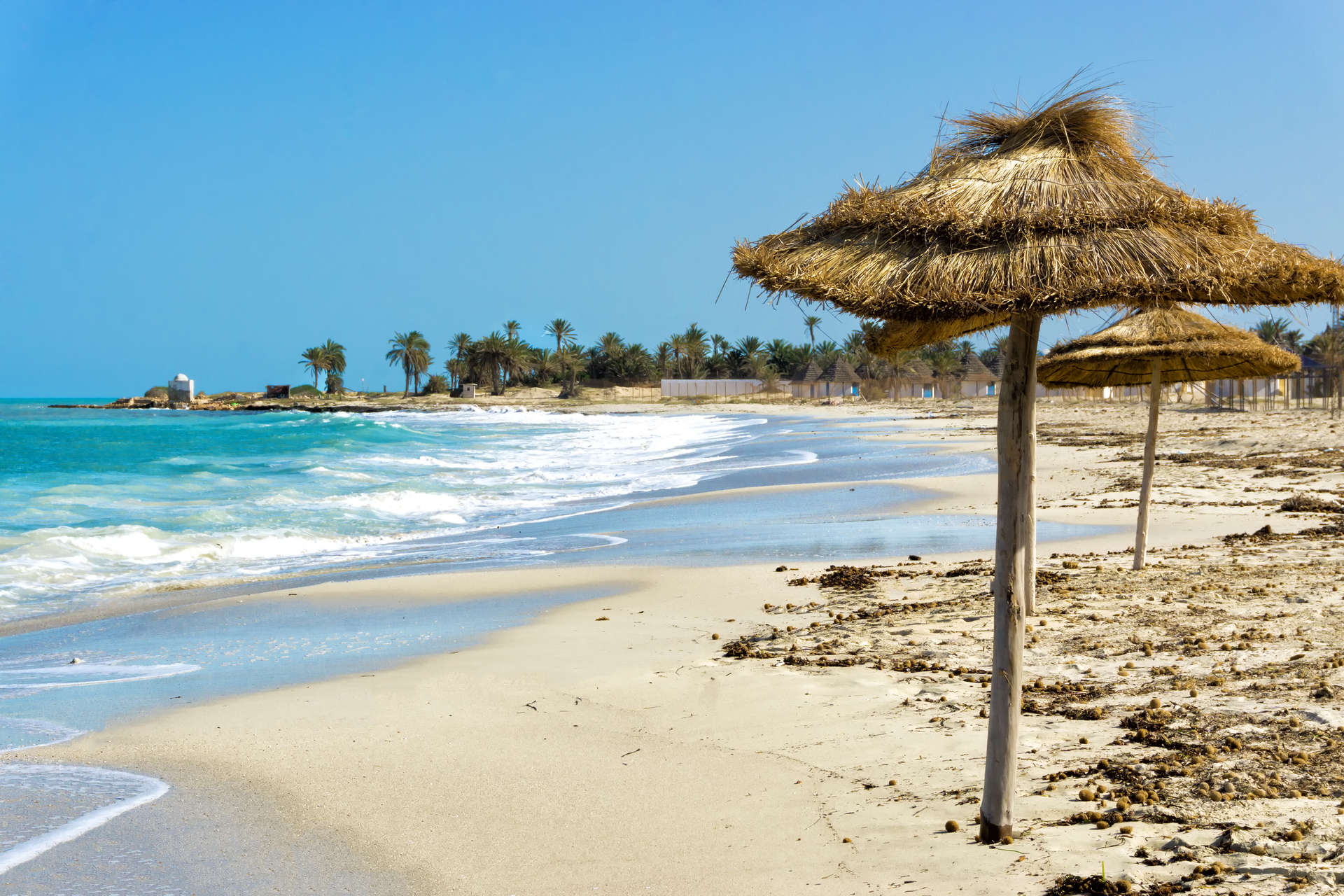
April to June is a fantastic time to visit, with warm but manageable temperatures and low rainfall, great for the beach. Highs range from 23°C in April to 30°C in June, although it can get up to over 35°C. It’s also less crowded – perfect for exploring the sights.
July to August sees the highest temperatures and visitor numbers, being a popular destination for summer beach holidays. Expect hot days averaging 30°C to 35°C, but temperatures can peak at about 45°C, so it’s best to seek shade around midday.
September to November is another great time to visit, with more moderate weather as temperatures drop from 30°C down to 22°C. The sea remains warm for swimming and the slightly increased rainfall revives the landscape, but crowds begin to thin out, making for more relaxed sightseeing.
December to March offers mild winter days with temperatures reaching around 16°C to 20°C; however, it can get a lot colder inland, especially at night. Although there’s more rain, there’s still plenty of sunshine, so it’s perfect for sightseeing without the crowds.
Practical information
Spoken languages: Arabic is the official language of Tunisia, but French is also widely spoken. English is commonly spoken in towns and tourist areas, but a few Arabic or French phrases can be helpful elsewhere in the country.
Local habits and customs: Tunisians are warm and welcoming, and returning the friendliness can go a long way. Dress modestly when visiting religious sites or in rural areas, and respect the local customs, especially during Ramadan.
Currency: The Tunisian currency is the dinar (DT). ATMs are widely available, and debit or credit cards are accepted in major hotels, restaurants and stores. However, cash is best for the markets and smaller shops.
Getting around: Taxis are easy to find and affordable. Louages (shared taxis) offer budget-friendly intercity travel. Buses run limited routes on the island and a more comprehensive service off it. Renting a car is a convenient way to explore Djerba and further afield.
Electricity and plug types: Tunisia’s electricity is 230V with regular two-pin European plugs (types C and E). UK travellers will need to take a travel adaptor.
Time zone: Tunisia is in the Central European Time (CET) zone, 1 hour ahead of GMT.