In collaboration with
Rough Guides


We’ve collected our top five Croatian national parks, from lesser-visited spots you might not have heard of to the ever-popular parks with waterfalls. Hike, swim, kayak and sail through these stunning environments to get a true sense of the spirit of Croatia.
In collaboration with
Rough Guides
There’s no question about it: Krka simply has to be top of any list of national parks in Croatia for its stunning beauty – a visit here is a truly unique experience. It’s one of the two best-known national parks in Croatia with waterfalls, spanning an incredible 109km² of the Krka River and the lower course of the Čikola River. Here, breathtaking falls gush from the Eden-esque forest, forming idyllic pools at the base where visitors can cool off and swim. Seeing the falls is one thing, but being able to take a dip in the cool, clean and crystal-clear water is a rare treat. Some of the most iconic spots are Skradinski Buk falls – a multi-tiered torrent with a blue-green pool you can swim in – as well as the tiny and magical island of Visovac, in the centre of a wide section of river with a picturesque monastery, and the jaw-dropping Roski Slap waterfall. You can walk and cycle all around the park, but one of the best ways to take in the verdant scenery is on a boat tour of all the key areas.

How to get there: Bus from Zadar/Split/Sibenik, 1h drive from Split.

Entry fee: 200 kuna in high season
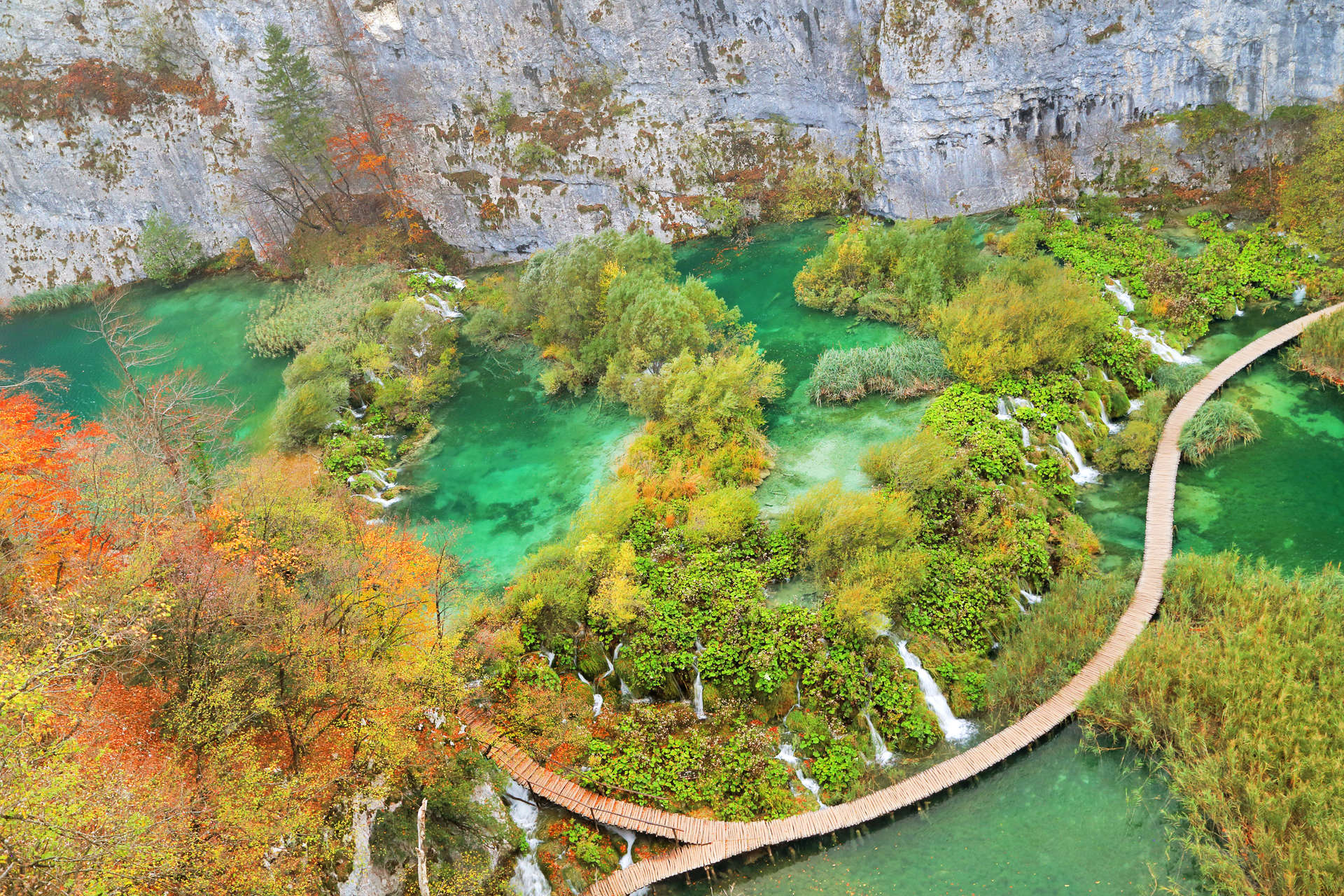
You can’t mention national parks with waterfalls without thinking of the breathtaking blue-green hues of the Plitvice Lakes National Park. Set within 300km2 of protected landscape, 16 interconnected lakes are the main draw here, viewed from glorious meandering boardwalks. The route leads you from sparkling pool to sparkling pool, behind waterfalls, alongside impressive cliffs and under jungle-like canopies. As you traverse the 8km of falls at river level, you can hear the delicate singing of the water as it flows and feel its cooling spray in the air. There are two entrances, with most visitors opting for Entrance 1. Here, you instantly stumble across a dazzling panorama of dark-rock cliffs, seemingly endless forest and waterfalls tumbling in every direction. You can take a shuttle bus between the upper and lower sections of the park and choose from over a dozen suggested routes through the most popular sights. There’s no bad time of year to visit, although the walking in winter is limited and you’re likely to be greeted by a carpet of white. Autumn is a riot of colour, while spring and summer are most popular, with a lush green backdrop and the hum of birds and bees.
Entry fee: 80-300 kuna, parking 8-10 kuna/h
How to get there: Bus from Zagreb/Zadar, 2.5h drive from Split
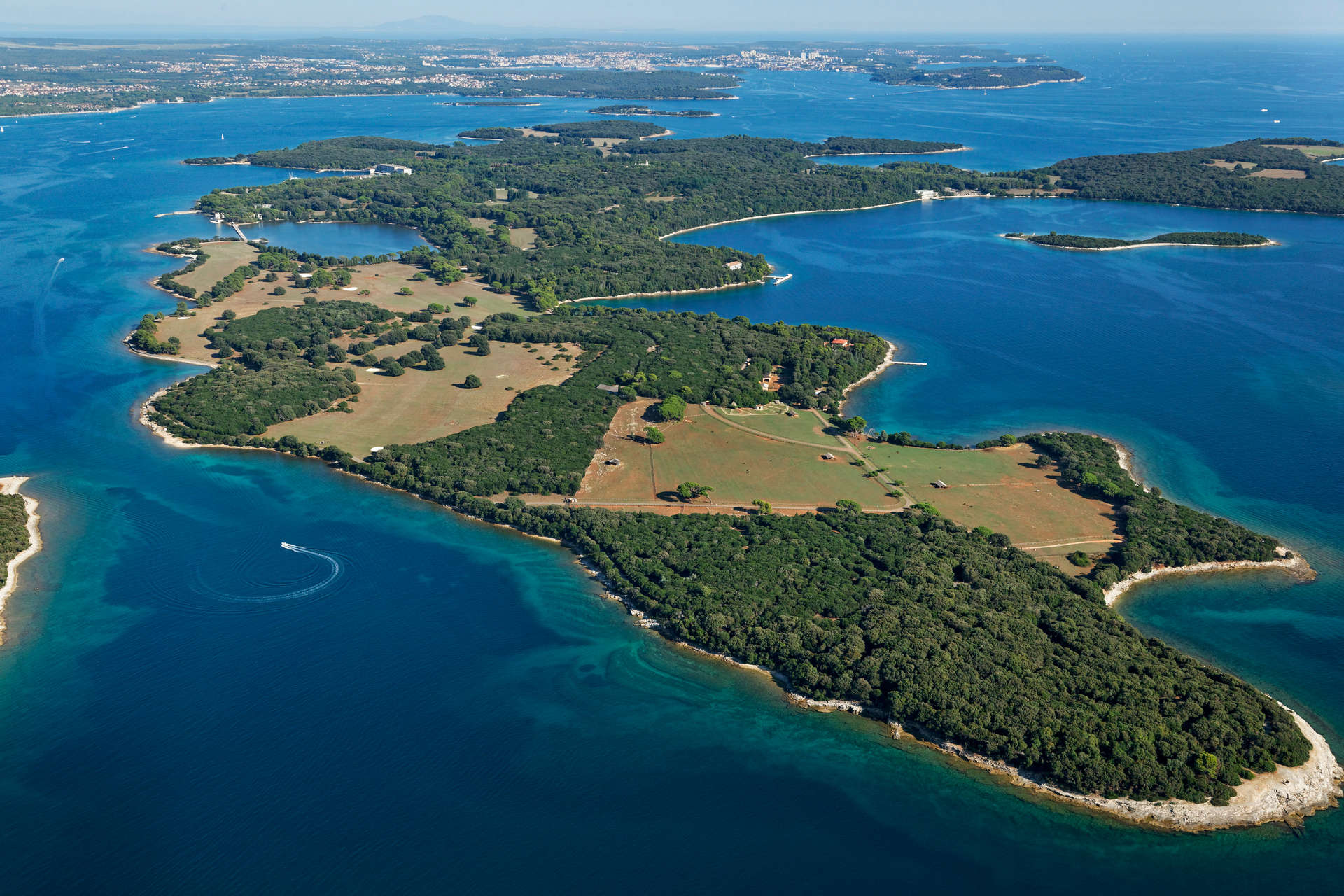
Off the coast near Pula, Brijuni is one of the Croatian national parks set on an island – or 14 small islets, to be precise. Only the main island is accessible via boat from the mainland, and it is home to relics from all ages of history, from dinosaur footprints to Roman ruins. It is notable for once being the summer residence of former president Tito, and the safari park is still home to some of the stranger animals he was gifted during his time in power. Meanwhile, native animals including deer and mouflon still roam freely outside the walls, and the islands are home to over 600 indigenous plant species. While there, you can peruse churches and museums and visit one of the oldest olive trees in the Mediterranean, said to be around 1,600 years old. The Mediterranean Garden is an enchanting place to enjoy a peaceful afternoon strolling amongst the indigenous flora. One of the island’s main draws is the opportunity to take a dip off it. With a limited number of tourists each day, the shores are calm and quiet and the water is pristine and clear, making swimming here a dream.
Entry fee: 200–250 kuna
How to get there: Regular ferries to Veli Brijun depart from the town of Fazana
As you drive through Plaklenica, it’s hard to imagine you’re only a few short miles out of Zadar. The stunning craggy landscape stretches as far as the eye can see, with the jagged grey peaks of the Velebit Mountains protruding from huge swathes of woodland. This is a haven for climbers, wilderness-seekers and hikers, with 150–200km of trails. The Manita Peć caves are a popular visitor stop in this in Croatia, with guided tours unveiling some of their weird and wonderful stalagmites and stalactites. There’s even a formerly hidden network of tunnels and bunkers in the park – remnants of past wars – that are open for guided tours. The two canyons are Velika Paklenica, with its dramatic slopes, rapids and waterfalls, and smaller Mala Paklenica, with a shorter but quieter walk. To get the best views in the park, experienced hikers might want to tackle one of the three peaks over 1,700 metres. You’ll need to give yourself plenty of time and take food and water, but the reward is an absolutely breathtaking view. Travellers seeking peace and quiet will appreciate the fact that it’s much less visited than the national parks in Croatia with waterfalls.
Entry fee: 1-day pass 20–60 kuna, cave entry 30 kuna
How to get there: From Zadar by bus, or 45 mins by car
Just off the coast of Zadar, Telašćica is a true natural park. The protected area is on the southern tip of Dugi Otok, and highlights include bottle-nosed dolphins, peregrine falcons and the stunning 200-metre tall white cliffs over the Adriatic. One of the best ways to see this Croatian national park is by boat, for a stunning view of the cliffs and your best chance of spotting a pod of dolphins. You can also stay on Dugi Otok island and explore by foot. The park always feels serene, with wooded and rocky hills, quiet coves and cliffs teeming with birdlife – all barely disturbed by the small numbers of tourists. Swimming in the salt lake is blissful, a few degrees warmer than the sea and pleasantly sheltered, surrounded by pine forest. Visitors often make a beeline for the former military base turned viewpoint, Fort Grpascak. From here, you have a splendid view across the island and over to the Kornati Islands. You can choose from a variety of clifftop walking routes (maps are readily available from the tourist information office in Sali) past glorious, uncrowded beaches with golden shores and clean, aquamarine waters.
Entry fee: Organised boat excursion for 25–40 kuna per day
How to get there:Ferry from Zadar, or by boat