



26 things to do in Manchester
- Explore the different neighbourhoods
- Get some good food
- Go for a big night out
- Learn about Manchester's music scene
- See some live music
- Check out Canal Street
- Tour a football stadium
- Discover Manchester’s popular National Football Museum
- Get wet (and we're not talking about the rain)
- Cycle in a circle
- Wander around Manchester's museums
- See where the Suffragettes started
- Find out more about Manchester Cathedral
- Read a book in two of the finest libraries in the world
- See a theatre show
- Spend some time (and money) shopping
- Browse the markets in Manchester
- Spend an afternoon in the fantastic Manchester Art Gallery
- Enjoy music at the Chetham’s School of Music
- Relax in the parks and open spaces
- Walk along the canals…
- ...or take a cruise on them
- Visit Albert Square (no, we're not mixing our soaps up)
- Attend one of Manchester's famous festivals
- Make it a festive trip
- See Manchester’s architecture for free!
2. Get some good food

4. Learn about Manchester's music scene

7. Tour a football stadium
8. Look around the National Football Museum
Manchester’s National Football Museum, housed in a suitably spectacular structure – the sloping, six-storey glass Urbis building near Victoria train station –houses some true treasures of the world’s most popular game. Here you can see the 1966 World Cup Final ball, Maradona’s 'Hand of God' shirt, and the only surviving version of the Jules Rimet World Cup trophy. They also display the personal collection of Sir Stanley Matthews (1915-2000), considered one of the greatest English footballers of all time. You have to pay for the exhibitions, but entry is free.
9. Get wet (and we're not talking about the rain)
10. Cycle in a circle
If you've been inspired by Sir Chris Hoy or Laura Trott, visit the National Cycling Centre and have a go on an indoor Olympic-standard track. Over 12s can try a taster session in the Velodrome, and spend an hour learning the skills needed to ride the banked sides.
12. See where the Suffragettes started

13. Find out more about Manchester Cathedral

Manchester Cathedral dates back to the fifteenth century, though its Gothic lines have been hacked about too much to have any real architectural coherence. Actually, it’s surprising it’s still here at all: in 1940, a 1000lb bomb all but destroyed the interior, knocking out most of the stained glass, which is why it’s so light inside today.
The Angel Stone is all that remains from an early Saxon Church (c700) and was found embedded in the South Porch of the current cathedral in Victorian times. A £2.9m visitor centre was opened by Her Majesty The Queen in 2002, and in the basement you can see the remains of a medieval hanging bridge, only discovered during excavations in the 1880s and now a Scheduled Ancient Monument.
14. Read a book in two of the finest libraries in the world

While they contain endless book-shaped treasures, you'll mainly marvel at the buildings they're housed in. The Grade I listed John Rylands Library, part of the University of Manchester, is famous for its neo-Gothic architecture and was built in 1900. The fine oak panelling inside comes from Gdansk, and the exquisite Reading Room was built 30ft above the street so as not to disturb readers when the horse-drawn traffic passed over the Deansgate cobblestones . It's undergone a £17m refurbishment, but the original fixtures and fittings have been preserved. You can see some fine collections of books and other items in its exhibition gallery for free. Manchester is also home to Chethams Library - the oldest public library in the English-speaking world (1653). But the building its housed in is even older, as it was built in 1421 for priests to live in. As well as the unique furniture in the beautiful Reading Room, they have a collection featuring works once owned by Henry VIII and the Renaissance playwright and poet Ben Jonson. Its free to visit, but as it's run by an independent charity, they welcome donations to help its upkeep.
15. See a theatre show

The largest "theatre in the round" in the country is Manchester's Royal Exchange Theatre. With an interior designed to resemble a lunar space craft (weighing in at 150 tonnes), no seat is further than nine metres from the stage, which has seen Helen Mirren, Tom Courtenay and Maxine Peake tread its boards. The Palace Theatre in Oxford Street first opened in 1891 as a music hall venue, and shows West End musicals as well as opera and ballet. There's also the Contact Theatre – run by the charity Contact – which aims to give opportunities to the next generation of creatives, so expect a dynamic and diverse programme. The Opera House has been a theatre, cinema and then bingo hall, before moving back into theatrical productions in the 1980s. Expect West End shows and plays on their regional tours, along with comedians, cabaret and "audience with...." evenings.
16. Spend some time (and money) shopping

Manchester has a great blend of large shopping centres, independent shops and boutiques. There's two Selfridges in Manchester, one in the Trafford Centre and the other in Exchange Square. You can find more high-end shopping in Harvey Nichols, which is close to the National Museum of Football and the Royal Exchange. Don't forget to pop into the bar for a glass of champagne. You'll find all your high street favourites in the Trafford Centre - which also has a cinema, adventure golf and LEGOLAND® Discovery Centre. It's five miles out of the city centre, but you can drive, get the bus, train or tram there. If you're staying central, the Manchester Arndale centre has more than 200 shops, or Deansgate's Barton Arcade is like stepping in time as you shop, as the bright, airy Victorian glass and iron structure, built in 1871, has been significantly restored. Visit Affleck's Palace, on Church Street, which has tattooists, vintage clothing and jewellery among its stores.
17. Browse the markets in Manchester
Church Street Market has been a city fixture for more than a 100 years, selling clothes, fruit & veg and second-hand books, as well as street food. Piccadilly Gardens also holds a weekend arts and crafts market.
18. Spend an afternoon in the fantastic Manchester Art Gallery
Manchester Art Gallery was launched in 1823 as the Royal Manchester Institution for the Promotion of Literature, Science and the Arts, becoming the MAG in 1882, and has a fine collection of Pre-Raphaelite paintings. The galleries, café and shop are all free to enter.
19. Enjoy music at the Chetham’s School of Music
The choristers in Manchester Cathedral are trained at Chetham’s School of Music. This fifteenth-century manor house became a school and a free public library in 1653 and was turned into a music school in 1969. There are free recitals during term time, and you can visit the oak-panelled Library with its handsome carved eighteenth-century bookcases. Along the side corridor is the main Reading Room, where Marx and Engels beavered away on the square table that still stands in the windowed alcove. There’s no public access to the rest of the complex, except to Stoller Hall, a 500-seat concert hall that had its grand opening in 2017. Looking for Manchester holidays? We've got a huge selection of fantastic options for you to have a look through.
20. Relax in the parks and open spaces

Piccadilly Gardens has undergone a huge redevelopment to become a major public space in the city, hosting live concerts and events, particularly in the summer. It has fountains as well as grassy areas to sit and have a picnic on, and is surrounded by listed buildings, cafes and restaurants. Didsbury St James Conservation Area is a great place to see some of Manchester's finest buildings, including The Church of St. James. Or Fletcher Moss Park, Didsbury has beautiful botanical gardens to visit, while Heaton Park is a Grade II listed open space. One of the largest conservation areas in Manchester is in Castlefield, where the Roman's built a fort they called Mamucium.
21. Walk along the canals...

22. ...or take a cruise on them
23. Visit Albert Square (no, we're not mixing our soaps up)
Although it's the home of ITV's Coronation Street, one of the most popular places to visit in the city centre is Albert Square (also the fictional home of its arch soap rival, Eastenders). The Victorian Gothic, Grade I listed Manchester Town Hall dominates the public square, but The Albert Memorial is equally striking (and listed), with its ornate spire. It's one of several public statues in the area.
24. Attend one of Manchester's famous festivals

The city's cultural calendar is pretty packed throughout the year - and in the summer time in particular, when the festivals come thick and fast. The Manchester International Festival (MIF) takes place every two years in venues across the city, check out their website to find out the upcoming dates. They offer a critically-acclaimed performing and visual arts programme. Heaton Park hosts music festival Parklife, one of the biggest festivals in the UK. At Castlefield Bowl, an open-air amphitheatre, Sounds of the City has live music over three weekends in the summer, featuring some of the most acclaimed artists. However the major annual event in the city, usually held over the August Bank Holiday, is Manchester Pride. Manchester's Gay Village is the hub of the colourful celebrations of the LGTBQ+ scene in the city.
25. Make it a festive trip

Manchester is fast gaining a reputation for its Christmas markets, with around ten city centre markets to choose from. The chalets arrive in the middle of November, and finish just before Christmas Eve. Along with all the gifts, there are bars and street food. The Christmas Lights usually have their big switch on at the start of November, with a celebrity pushing the button in Albert Square.
26. See Manchester’s architecture for free!
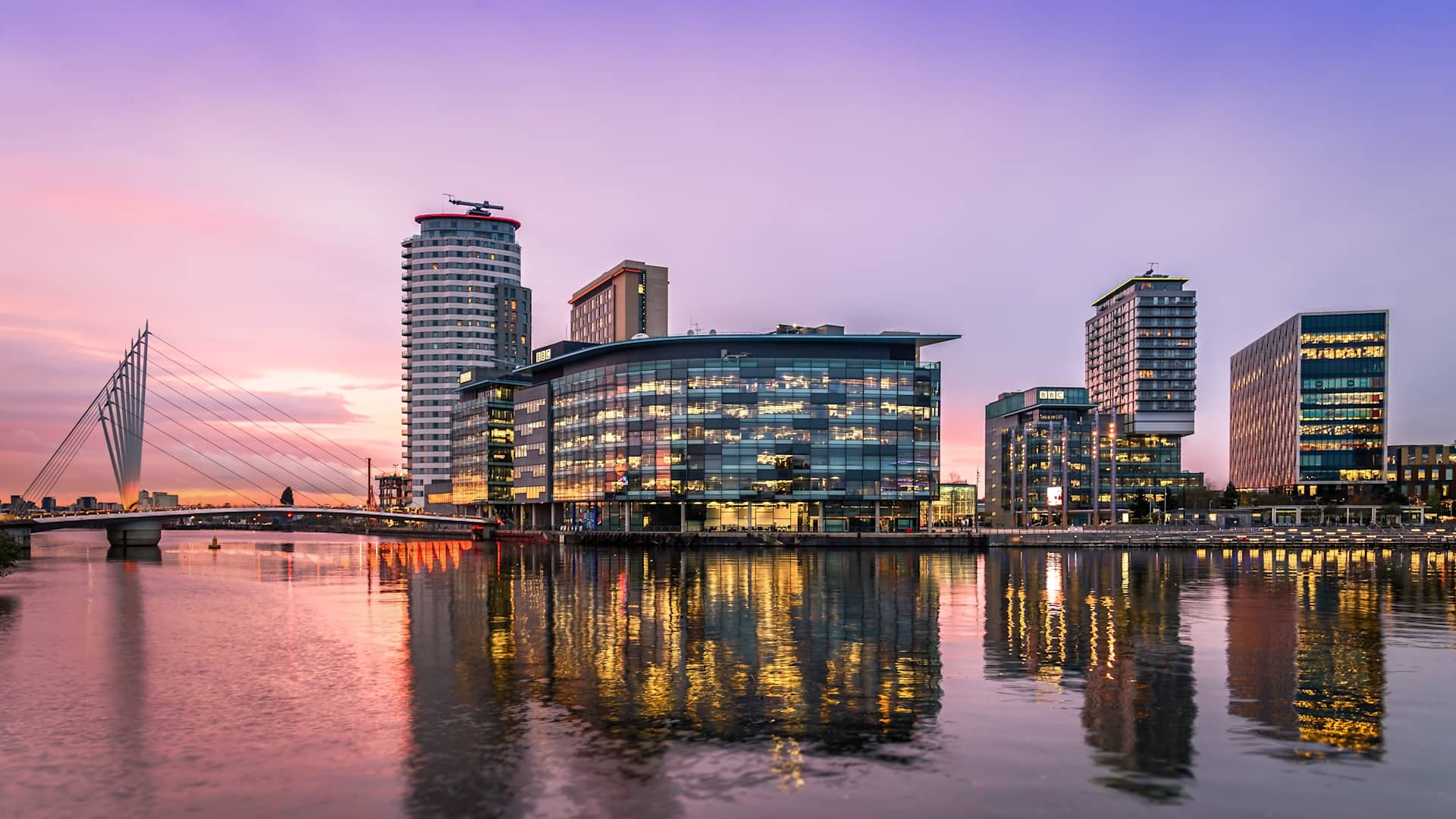
Deansgate cuts through the city centre from the Rochdale canal to the cathedral, its architectural reference points ranging from Victorian industrialism to post-millennium posturing. One landmark is the Great Northern mall, flanking Deansgate between Great Bridgewater and Peter Street. This was once the Great Northern Railway Company’s Goods Warehouse, a great sweep of brickwork dating back to the 1890s, originally an integral part of a large and ambitious trading depot with road and rail links on street level and subterranean canals down below.
FAQs: Things to do in Manchester
You could also be interested in
Find your perfect destination

Sign up to our newsletter
We'll send you exclusive offers and sneak peeks of our best deals,
plus travel tips and the latest advice on where you can go.